System Thinking
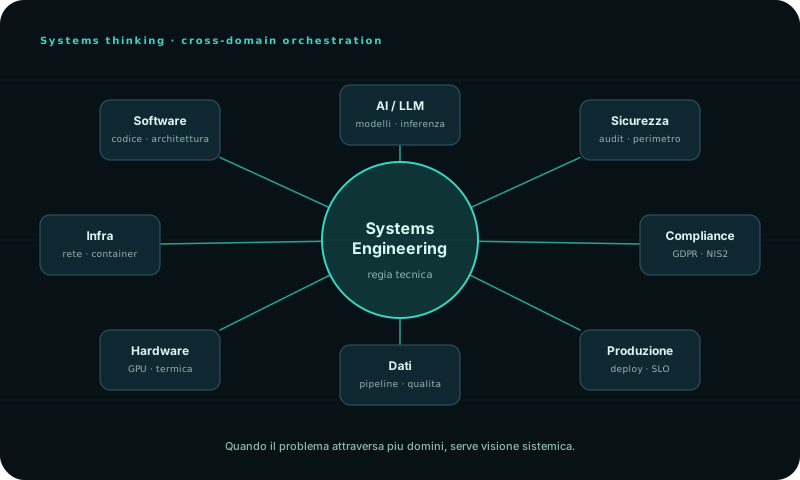
When a problem crosses multiple domains, you need systems thinking.
Many AI projects don't fail for lack of tools; they fail because development, data, infrastructure, security, testing, and production are treated as separate concerns.
AI accelerates. Systems thinking governs.
Not generic specialism, but integration
I don't replace vertical specialists. My role is to connect technical domains when the project requires an integrated view and the kind of direction that turns complexity into an operational path.
Where this function is needed
- Software must integrate AI, documents, and databases.
- A model must run in a private environment.
- A prototype needs to become a real service.
- AI-generated code must be verified.
- The client has security or compliance constraints.
- The infrastructure must be designed together with the application.
What it produces
- Architecture
- Priorities
- Risk reduction
- Technology choices
- Boundaries between automatable and controllable
- Delivery path
- Technical documentation
Systems thinking doesn't mean doing everything.
It means understanding how the parts must fit together: software, AI, data, security, infrastructure, operations, and verification.
Systems thinking doesn't mean doing everything. It means understanding how the parts must fit together.
Bring order to a complex AI project
Describe the context and constraints: from there we build a verifiable technical map.