Until recently, IT was made up of sysadmins, developers, DevOps: professionals who worked with their hands, writing code, configuring systems.
Today the new frontier is to rise to a higher level: we are no longer just executors, we become orchestrators of AI-based tools, semantic pipelines, adaptive engines, advanced generative models.
AI moves volumes of data, code and analysis that no team could match with manual work alone. We can analyze and aggregate in moments, access correlation levels previously unthinkable, automate debugging and analyses that belonged to a few experts.
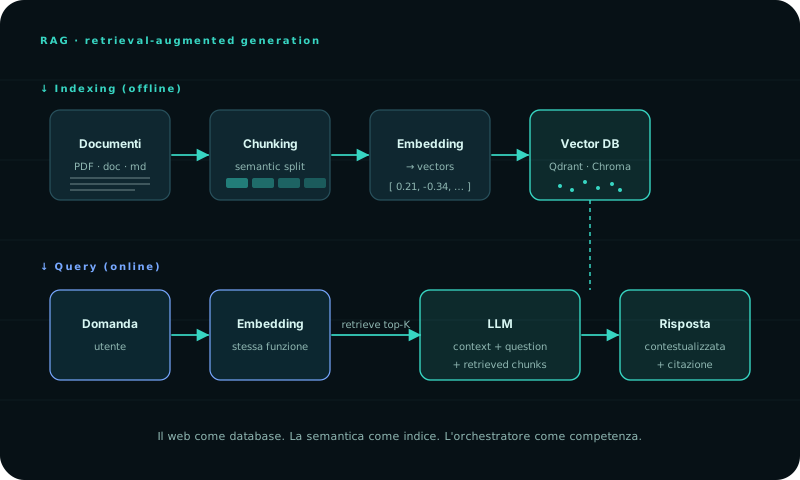
The heart of this evolution is computational semantics: thanks to embeddings, the machine not only understands text but connects it, stores it in a distributed manner, compares its meaning.
Tools like RAG and semantic chunking enable orchestration of complex knowledge flows, drawing on the web as a universal database.
The real competence today is knowing how to orchestrate these tools, designing knowledge pipelines, validating information, ensuring reliable results.
Human impact does not disappear, it elevates: from manual toil to direction of new digital intelligences.