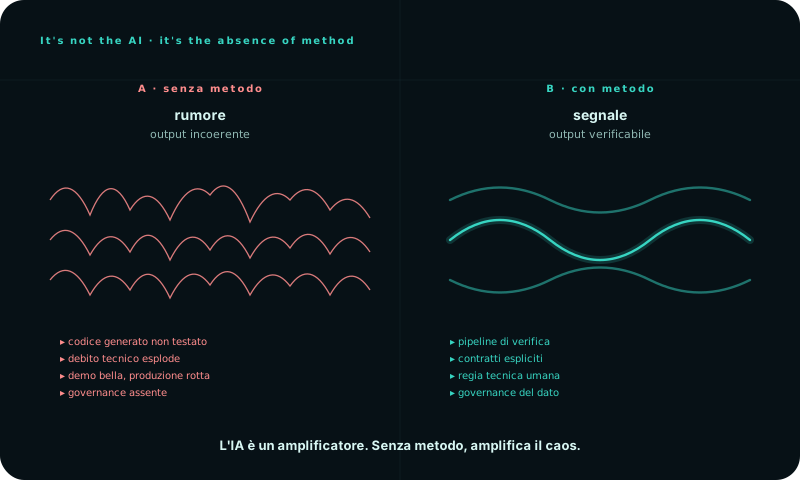
AI is not dangerous. What's dangerous is the superficial approach of those who pretend to use advanced tools without competence.
With substantial datasets, reliable historical data and rigorous instructions, an AI system can be more accurate than a doctor at spotting patterns, correlations, hidden signals. But you can't expect sensible answers to crisp questions hiding tens of thousands of unassessable variables.
Throwing a vague question and blindly trusting the answer risks self-harm. Same difference as driving a racing car with training versus getting behind the wheel without a license.
I use AI every day, but not as a toy. I verify, compare, place in context. AI becomes an amplifier, not an oracle: it helps connect dots, not replace judgment.
Asking "how do I reduce salt?" and being scandalized at nonsense. Versus asking "how do I calibrate electrolytes against my clinical profile and biofeedback?". First case: noise. Second: value.
Banning AI because someone misuses it is like banning knives because some cut themselves. Not the technology is dangerous: it's the carelessness with which it's handled.
AI is not the problem. It's the superficiality of those who treat it like magic and then are surprised by consequences. The future is built not by banning tools, but by learning to use them better.